
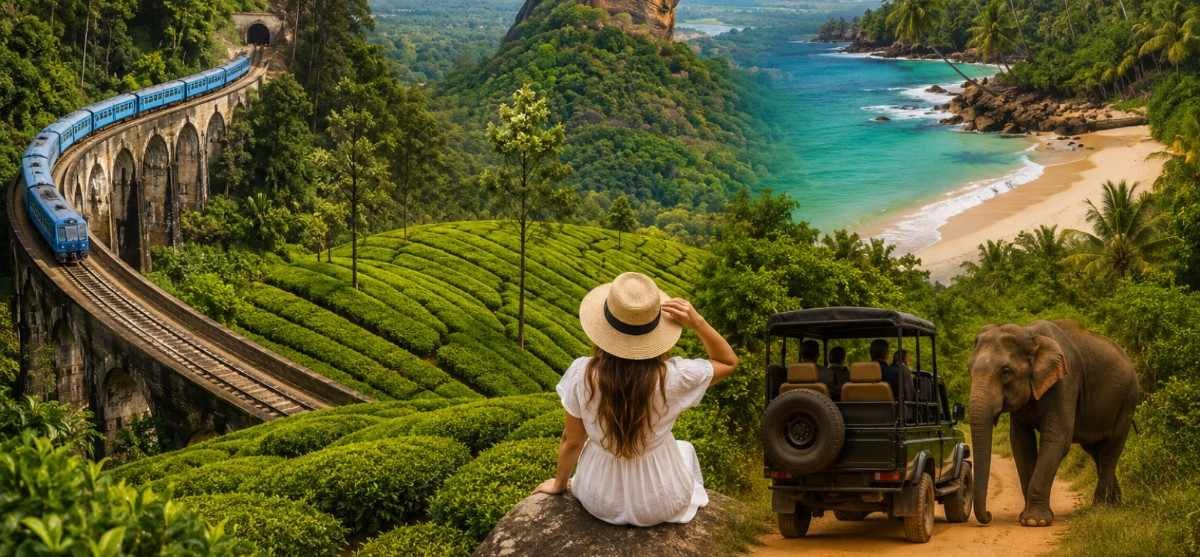
Sri Lanka has quietly become one of Asia’s most rewarding travel destinations — and not in the vague, everyone-says-this way. It genuinely has a lot going on: beaches, misty mountains, wildlife, ancient temples, tea plantations, and people who seem constitutionally inclined to be helpful to strangers. More Singapore travellers are figuring this out.
The problem is that social media shows you the highlight reel. The iconic train, the luxury resort, the leopard mid-stride. What it doesn’t show are the things that actually shape your trip — the ones you only learn by arriving.
Sri Lanka Looks Small on the Map. It Isn’t.

This catches almost every first-time visitor off guard.
On a map, the island looks manageable — the kind of place you could cover in a long weekend. In practice, the roads wind through mountains, slow through market towns, and take detours you weren’t expecting. Distances that look like nothing translate to hours.
Colombo to Kandy: 3–4 hours. Kandy to Nuwara Eliya: 2–3 hours. Ella to Yala National Park: longer than the map suggests.
The fix isn’t better planning — it’s lower ambitions. Travellers who try to see everything in a week spend most of it in a vehicle. Travellers who pick fewer places and actually stop tend to enjoy them considerably more.
The Train Isn’t Just a Way to Get There

Famous Kandy to Ella train journey through tea plantations
Most people have seen the photo: the blue carriage, the open door, legs dangling over tea plantations.
What doesn’t translate in the photo is that this is a genuinely excellent train ride — not just visually, but experientially. The route between Kandy and Ella passes through forests, waterfalls, small villages, and hillsides thick with tea. It takes hours. You don’t need anything to do.
Many people who treated it as a transfer leave calling it the best part of the trip. Book ahead, especially in peak season — the popular carriages sell out.
The Beaches Are Just the Start

Sri Lanka is what happens when a destination has beaches but also has everything else, and nobody gets around to updating the stereotype.
Within a single trip, depending on how long you stay, you can move from ancient temples at Sigiriya to wildlife in Yala to the colonial-era streets of Galle to surf beaches at Arugam Bay to the cool, tea-scented air of Nuwara Eliya. Not many destinations in the region offer that kind of range without a flight in between.
One day you could be watching an elephant gathering at Minneriya — hundreds of elephants in one place, which is exactly as dramatic as it sounds. The next you’re drinking Ceylon tea on a hillside somewhere in the clouds.
The Food Deserves More Attention Than It Gets

Sri Lankan food is genuinely good and consistently underestimated. Most visitors arrive expecting something like Indian food — similar spices, rice-based meals. The flavour profile is distinct though, and the coastal influence shows up clearly in the seafood.
The classics worth knowing: rice and curry, which is more varied than the name suggests and never exactly the same twice; hoppers, thin crispy bowl-shaped pancakes eaten with coconut sambal or a fried egg cracked in the middle; kottu roti, chopped flatbread stir-fried with vegetables and egg on a hot griddle — you’ll hear the clanging before you see it. The seafood on the southern and eastern coasts is excellent and cheap.
The best meals are in small family-run places, not hotel restaurants. Go where the locals eat. The prices are better and so is the food.
The Wildlife Is Genuinely World-Class

Sri Lanka has one of the highest densities of leopards in the world. That fact alone should get more attention than it does.
Yala is the main draw for big cats. Udawalawe is exceptional for elephants — higher sighting rates than many African safari destinations. Minneriya sees the “gathering,” when hundreds of elephants converge around a reservoir in the dry season. Wilpattu is quieter, less visited, with a landscape that feels more untouched. Birders tend to love the whole island.
You can build an itinerary that covers beaches, mountains, culture, and wildlife without any of them feeling like an afterthought. That combination is rarer than people realise.
The People Leave a Real Impression
This might sound like something you put in a brochure, so let me be specific: Sri Lanka has been through a lot. Economic crisis, decades of civil conflict, a devastating tsunami. The warmth visitors describe isn’t performed — it seems to come from somewhere more durable than that.
Conversations happen easily. With a tea plantation worker on a break, a tuk-tuk driver who takes you the wrong way and then insists on personally getting you to the right place, a guesthouse owner who sends you off with packed breakfast because your bus leaves too early. It’s the thing travellers mention most when they come back — and one of the harder things to photograph.
Luxury Here Costs Less Than Almost Anywhere Else in Asia

Sri Lanka has boutique hotels, beachfront resorts, private villas, luxury safari lodges, and wellness retreats that would cost three or four times as much in the Maldives, Japan, or Switzerland. The gap is significant. Honeymooners especially tend to find they can afford a level of experience here that they couldn’t elsewhere.
The top-end properties are priced at a level that reflects their quality — this isn’t budget travel in a nice font. But the value equation tilts heavily in the traveller’s favour.
Weather Isn’t the Same Everywhere at the Same Time
Sri Lanka has two monsoon seasons, and they hit different parts of the island at different times. The southwest coast gets rain from May to September. The northeast is dry during those same months. The hill country has its own thing going on.
This is good news: Sri Lanka is visitable year-round if you match your timing to the right region. Going to the wrong coast in the wrong season isn’t a disaster, but it’s avoidable. A travel planner who knows the country can map this out based on when you’re going.
The Best Moments Won’t Be in the Itinerary
Planned itineraries are useful starting points. They’re not what you’ll talk about when you get home.
What people tend to remember about Sri Lanka: a roadside tea stall in the mountains with a view they stumbled into, a local cricket match they stopped to watch for twenty minutes, a beach they found by asking someone who lived nearby, a conversation that ran longer than it had any reason to. The country moves at a pace that encourages this kind of thing. Build some slack into the schedule.
You Don’t Need Two Weeks
A 4 to 7-day trip from Singapore can comfortably cover Colombo, Kandy, Nuwara Eliya, Ella, and the southern coast — temples, mountains, a train ride, beaches, done. Longer trips let you slow down, add wildlife, and get further off the well-worn path. But the short version is still worth doing.
The flight from Singapore is around 3.5 hours. Shorter than it feels for how different the destination is.
Why More Singapore Travellers Keep Going Back
The short version: Sri Lanka gives you a lot for what you put in. Adventure, culture, nature, wildlife, beaches, real luxury — within one island, without having to choose. It consistently surprises people who thought they knew what they were signing up for. Some of them book again before they’ve unpacked.
Plan Your Sri Lanka Trip with Tailwinds Travels

Getting the most out of Sri Lanka comes down to sequencing — the right regions at the right time of year, realistic travel times between stops, accommodation that suits how you actually want to travel.
Tailwinds Travels builds itineraries around your priorities, not a template.
Explore Sri Lanka tour packages →
Frequently Asked Questions About Travelling in Sri Lanka
It’s 3.5 hours away and covers more ground experientially than most destinations three times further. Beaches, mountains, wildlife, culture, and real luxury — all in one place.
Four to five days covers the main highlights at pace. Seven to ten is more comfortable. Two weeks and you can take it properly.
It depends on where you’re going. Different coasts have different monsoon seasons, so the right timing varies by region. Worth discussing with someone who knows the country before you book.
Not relative to most luxury destinations. You’ll spend significantly less here than in the Maldives, Japan, or Europe for a comparable level of experience.
Yes. Millions of visitors go each year. Normal common sense applies, as it does anywhere.